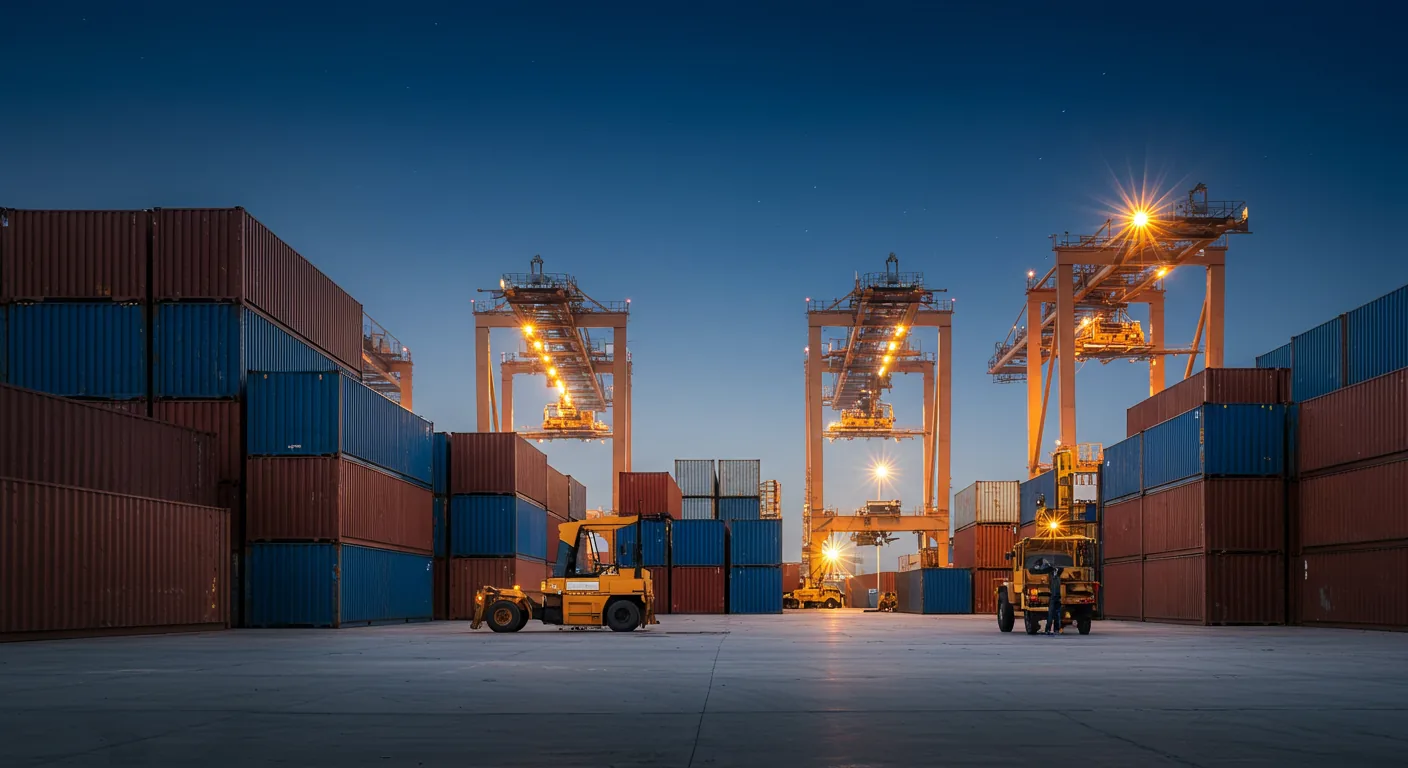
Global freight markets are bracing for another round of rate increases as port congestion across Europe and Asia has effectively removed 3.4 million TEU of container ship capacity from active circulation. For importers, exporters, and freight forwarders already navigating a volatile market, this combination of supply-side squeeze and imminent carrier rate hikes signals tighter booking windows and higher landed costs ahead — particularly on long-haul trades.
What Happened
Port congestion at major hubs across Europe and Asia has stranded an estimated 3.4 million TEU of box ship capacity in vessel queues. At Shanghai — the world's busiest container port — logistics provider NNR Global Logistics reports delays of four to five days, driven by surging demand for solar panels and an early-onset peak shipping season that has flooded terminals ahead of schedule.
Singapore, the world's second-busiest container port, is also experiencing what the industry describes as sub-optimal schedule reliability, with disruptions cascading through transhipment connections across Southeast Asia. Together, these bottlenecks are compressing effective capacity on key long-haul trade lanes — handing liner operators the market conditions they need to push through rate increases in July.
Impact on Freight Rates and Operations
The congestion-induced capacity squeeze is giving carriers significant leverage to implement general rate increases (GRIs) for July sailings. With millions of TEU sidelined in port queues, usable vessel supply on key routes has shrunk, and spot rates on Asia-Europe and transpacific corridors have been firming in anticipation. Freight forwarders report that confirmed space on peak-season sailings is narrowing fast, with available slots increasingly difficult to secure at short notice.
The solar panel export surge is a notable driver of the Shanghai backlog. China's accelerating clean-energy manufacturing cycle has generated outsized cargo volumes at a time when terminals are already handling early peak season surges — pushing dwell times and vessel waiting periods beyond seasonal norms. This sector-specific demand wave shows no sign of easing in the near term, keeping sustained pressure on Shanghai's throughput capacity heading into Q3.
What Shippers Should Do
- Book early, book firm: With space tightening on Asia-Europe and transpacific routes, securing confirmed bookings 3–4 weeks ahead of cargo ready date is now essential. Rolling cargo is a high-probability outcome for last-minute bookings in this environment.
- Reassess FCL vs LCL for borderline volumes: At elevated spot rates and GRI surcharges, consolidation into LCL may be more cost-effective for shipments under 15 CBM — but weigh that against added transit time risk before committing.
- Build contingency into delivery timelines: With Shanghai averaging 4–5 day port delays and Singapore experiencing schedule reliability issues, add at least one week of buffer to any committed delivery windows for July shipments onwards.
- Track July GRI announcements now: Carriers typically confirm specific rate levels 2–3 weeks before implementation. Monitor announcements from major lines and, where possible, renegotiate contracts before new rates lock in.
Key Takeaway
Port congestion trapping 3.4 million TEU has handed carriers the supply-side conditions they need to push July rate hikes — shippers who act on bookings and delivery timelines now will be better positioned than those who wait.
Plan Your Shipment: Plan your load with our Freight Class Calculator and Pallet Calculator.
Source: The Loadstar